
Expectation - How the Placebo Effect and its Evil Twin Really Can Impact Your Symptoms.
What you expect to happen with a treatment or trigger has a real, measurable impact. No, it isn't all in your head.

Expectations matter. When I visit the doctor for a vaccination, my suspicion that it is going to hurt causes real symptoms. My heart rate rises, my muscles tense, I begin to sweat a little. These physical reactions are not imagined, even though the pain of the impending injection is. In reality of course I usually hardly feel it and wonder what I was worried about. Well except last weekend when I had a shingles vaccine which hurt like hell and put me out of action for two days… let’s leave that to one side. I begin with this because when discussing the “placebo” effect, you might be under the impression that it is something about things that are “all in your head”, and from the start I want to assure you that is not the case and not the focus of what we are going to discuss.
What is meant by “placebo”? It is a term that comes from medical science, from the testing of real drugs and treatments. One way to check if the active ingredient in a drug is really doing something is to give half of the people in a trial the drug and the other half an identical looking pill with no drug in it. To do this well, not even the person giving the drugs out knows which is which. The fake pill is called a placebo. Over years of doing trials, it has been noticed that sometimes people seem to report improvement even when taking the placebo treatment, and this has been called “the placebo effect”. The point of this article is to give a little overview of this and how it might be relevant to Meniere’s, rather than to dive deeply into what is a very complex topic.

So what might be happening? There are many reasons why someone might begin to feel better even though no active drug was taken. Maybe the expectation of being given a treatment really is somehow influencing the body, but this is not the only explanation. Many conditions have symptoms that come and go, so possibly it just got better naturally. Maybe having taken the decision to begin a treatment the patient also then takes their own rest and recovery more seriously. Or it could be knowing that they are taking a drug that should help means that the sufferer reports their symptoms differently, feeling that they really should be improving. However there are ways to get around some of this. For example, experimenters have tested pain relief by secretly giving some patients the treatment without them knowing, whilst giving the same treatment to others and clearly telling them what they were getting. Those that know they are getting treatment tend to report better pain control. So in that case the expectation does seem to be doing something.
There is another side to expectation - the “nocebo effect”. This is when you expect that a treatment might have an unpleasant side effect, and it does, even though you actually didn’t get the real thing. This seems to show that expectation of bad outcomes can somehow provoke those bad outcomes. Again, there are many possible reasons for this. Firstly we know anxiety has real physical effects on the body. Secondly, being told to be alert for unusual or new things might make the patient pay more attention to normal everyday aches or pains, hearing defects or other issues and have the sense that they must be down to the treatment. Whatever the cause, inactive placebo treatments can and do seem to have side effects!
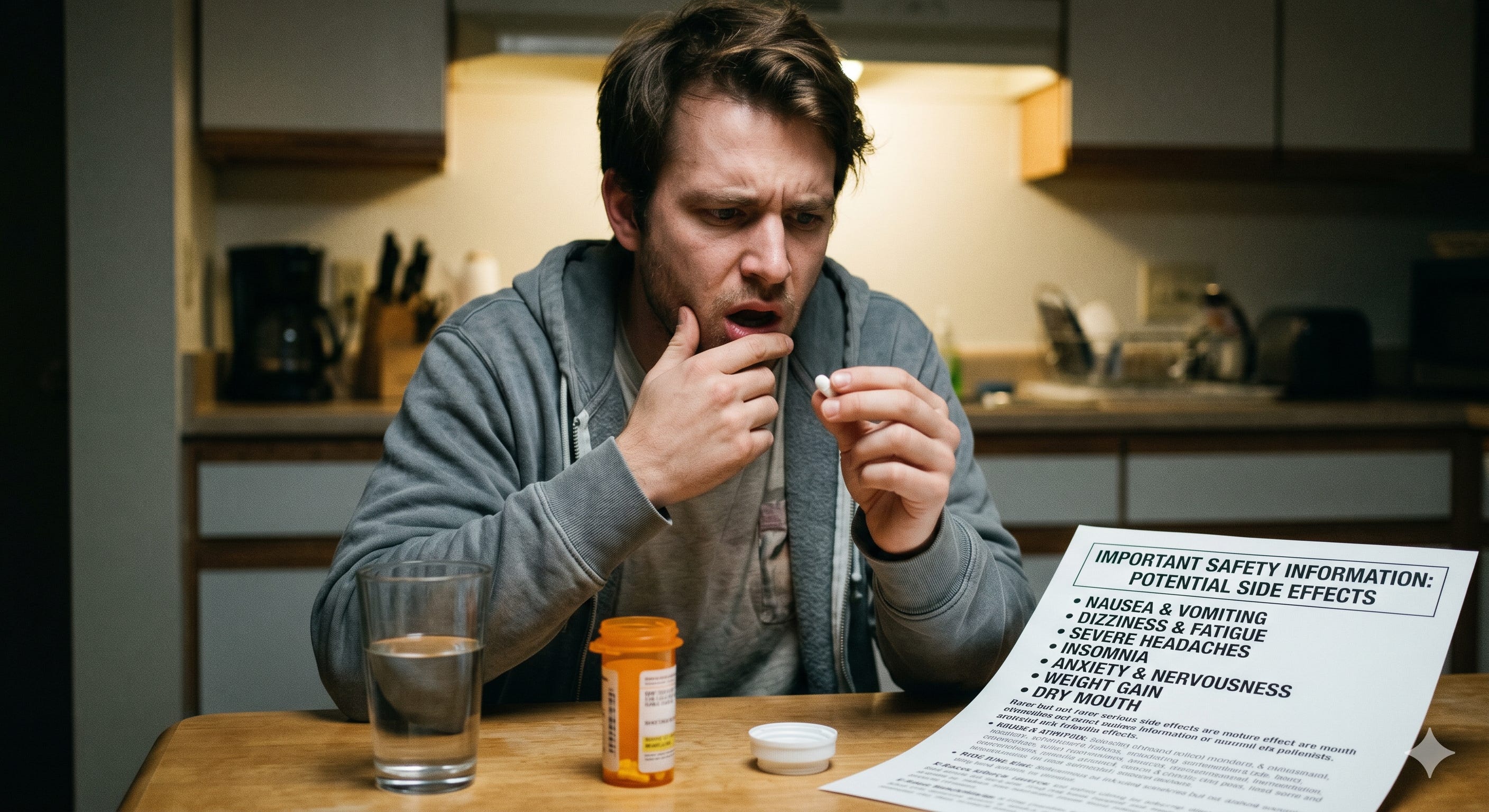
How does this apply to Meniere’s and other vestibular and hearing disorders? First all the potential explanations for the placebo effect can be in play at once with Meniere’s treatments. Meniere’s is a notoriously fluctuating condition, with sudden spontaneous periods of remission that can last days, weeks or months, so it is very hard to know if the treatment you gave someone really worked. Then the symptoms such as tinnitus or degree of vestibular issues are not readily measured, relying instead on self-report. One exception to that would be hearing loss which can be objectively measured, but not if you do it yourself. The overall progression of the disease also means symptoms change through time with vertigo spells tending naturally to get less frequent or less intense, hearing loss tending to get worse and overall balance declining. So there is no constant background to compare to. This is why the landscape of medical trials for Meniere’s treatments is carpeted with mixed results and poor quality evidence.
There is evidence that the both the placebo and nocebo effects are real in conditions relating to Meniere’s. An experiment was conducted in which participants were told that a tablet they were given would influence their balance. It did, even though it was a placebo. If told it would improve their balance, they walked more steadily, if they thought it would make their balance worse, they walked more unsteadily. Stress is also known to worsen tinnitus and impact vertigo. The impact of psychological state on Meniere’s has been well studied including the finding that vertigo is more likely in the hours directly after situations causing emotional distress.
When it comes to the placebo effect for treatments in Meniere’s the evidence is strong - ironically it may be one of the few examples of robust evidence for something in Meniere’s disease. There have been many trials of drugs such as betahistine where the drug is compared to placebo, and it is common for at least 50% of those taking the placebo to report similar improvements to those taking the drug. One of the largest ever betahistine trials (the BEMED trial) concluded that the drug was no better than placebo - not because no one got better, but because both real and placebo groups saw a huge 70% improvement in symptoms. The placebo effect extends to surgery too - maybe the much more extreme nature of such treatments increases the likelihood of an “expectation” based effect. In 1981 a study compared a common surgical procedure for Meniere’s - endolymphatic sac decompression surgery - with sham surgery where all steps of the surgery apart from the final decompression were carried out. Both groups of patients reported a 70% reduction in symptoms. So the actual decompression seemed, in that study at least, not to be the reason for the improvement.
A topic dear to many Meniere’s sufferers hearts is the idea that there are particular triggers that worsen symptoms or start the process that inevitably ends with hearing collapse and vertigo. The most common of such triggers are dietary, such as excess salt consumption or caffeine use, or weather changes especially swings in barometric pressure. It is clear from the huge numbers of reports I see daily in support groups that people really do feel that they experience fluctuations in symptoms that seem to match up with one or more of such triggers, and in the case of diet, many find that avoiding a trigger leads them to feel that they suffer less. If this is you, definitely keep doing what works for you.
There is another possible side to the trigger story though - we already saw that expectations really matter and anxiety is a known trigger in itself. So there is a danger that a heavy focus on triggers could potentially make things worse. For example, suddenly noticing from a packet or menu that the meal just eaten was a salt bomb may well totally stress many sufferers and that alone may worsen or even start symptoms. This is in no way however intended to suggest that salt or other triggers are not an issue for some people - clearly they are.
When it comes to barometric pressure as a trigger, it is an intriguing topic. Here the possibilities for the nocebo effect are worth bearing in mind - many people use apps to monitor the weather and pressure and to look for forecasts. Is there a danger that due to the very real impact that expectation can have these forecasts may worsen things for some people? I suspect there is but I’d love to see some studies on it. The interplay between what is really happening physically and the expectation will be complex and I’m sure there won’t be an easy answer. Again this is not in any way a suggestion that people don’t experience the symptoms that they report when weather or pressure changes.
There is an expanding range of tracker apps suddenly becoming available for Meniere’s, largely due to the huge advances in AI coding allowing more people to quickly write software. Some of these apps are beginning to try to “predict” when you might get attacks, based on automatically pulling in weather forecasts and pressure data, or dietary information such as salt consumption. I can see how this looks like added value and important information for people to have in planning. Based on what we know though about the power of expectation I also have concerns that these predictions could become, in some situations at least, self-fulfilling.
Meniere’s disease and related vestibular disorders such as vestibular migraine are heavily intertwined with the placebo and nocebo effects, both in trying to assess whether treatments really help and also potentially in thinking about and managing triggers. I would love to see a proper study of expectation in Meniere’s and one or more of these tracking apps could even form the basis for it. Could be really fascinating!
AI Statement
No AI was used to create the text in this article. AI was used at times to help with some of the research, but sources were always followed up and no AI output was used in the final text. AI was used to help generate the some of the images and thumbnail
Once again, you have presented an explanation to an ongoing phenomenon question that has been lingering and needed to be addressed. Thanks again for sharing your thoughts, research, observations & time .
Great read - i use my barometric app to check myself - so if it’s a bad day I’ll look to see if the barometer is shifting and usually feel relief when they align. So curious how your experience with shingles vaccine was overall, I’m nine days out and still have residual inflammation and a knot in arm - no attacks but I meditated and slept when it felt like I was about to get hit!